


Almost everyone does it once. You crash on the couch, wake up in the dark, and your eyes feel like sandpaper. Your lenses are still in.
Harmless? Not quite. Roughly one in three lens wearers sleeps or naps in their contacts, and the risk is bigger than a dry morning.
In this article, we cover:
-
What happens to your eyes overnight
-
The real infection and damage risks
-
Whether any lenses are safe to sleep in
-
What to do if you doze off
-
Habits that prevent it
At Daring Eyes, we want you loving your lenses for years. So let's clear this up.
What Happens When You Sleep in Contacts
Your eyes work differently at night. Once your eyelids close, the rules for oxygen, moisture, and bacteria all change, and a contact lens makes every one of those changes worse.
Your Cornea Breathes Through the Air
Your cornea has no blood vessels of its own. It pulls oxygen directly from the air and your tear film, which is why it stays crystal clear.
Closing your eyes already cuts that oxygen supply. A contact lens under a closed eyelid reduces oxygen even further and limits the natural tear exchange that flushes away microbes and debris.
The result is corneal hypoxia, a fancy term for a cornea starved of enough oxygen. Starved corneal cells swell, weaken, and lose their ability to fight off infection.
Bacteria Get a Warm, Dark Home
Your eyes rely on blinking and tears to wash germs away. During sleep, you blink zero times and produce fewer tears.
That leaves a warm, dark, damp pocket under the lens. It's the perfect breeding ground for bacteria, and the tiny scrapes a lens can cause overnight give those bacteria an easy way in.
Eyes Open vs. Eyes Closed With a Lens
|
Factor |
Awake, Lens In |
Asleep, Lens In |
|---|---|---|
|
Oxygen flow |
Reduced, but refreshed by blinking |
Sharply restricted |
|
Tear exchange |
Constant with every blink |
Nearly stops |
|
Bacteria removal |
Flushed out regularly |
Trapped under the lens |
|
Lens hydration |
Supported by blinking |
Lens dries and tightens |
|
Infection risk |
Baseline |
Six to eight times higher |
The Real Risks of Sleeping in Contacts
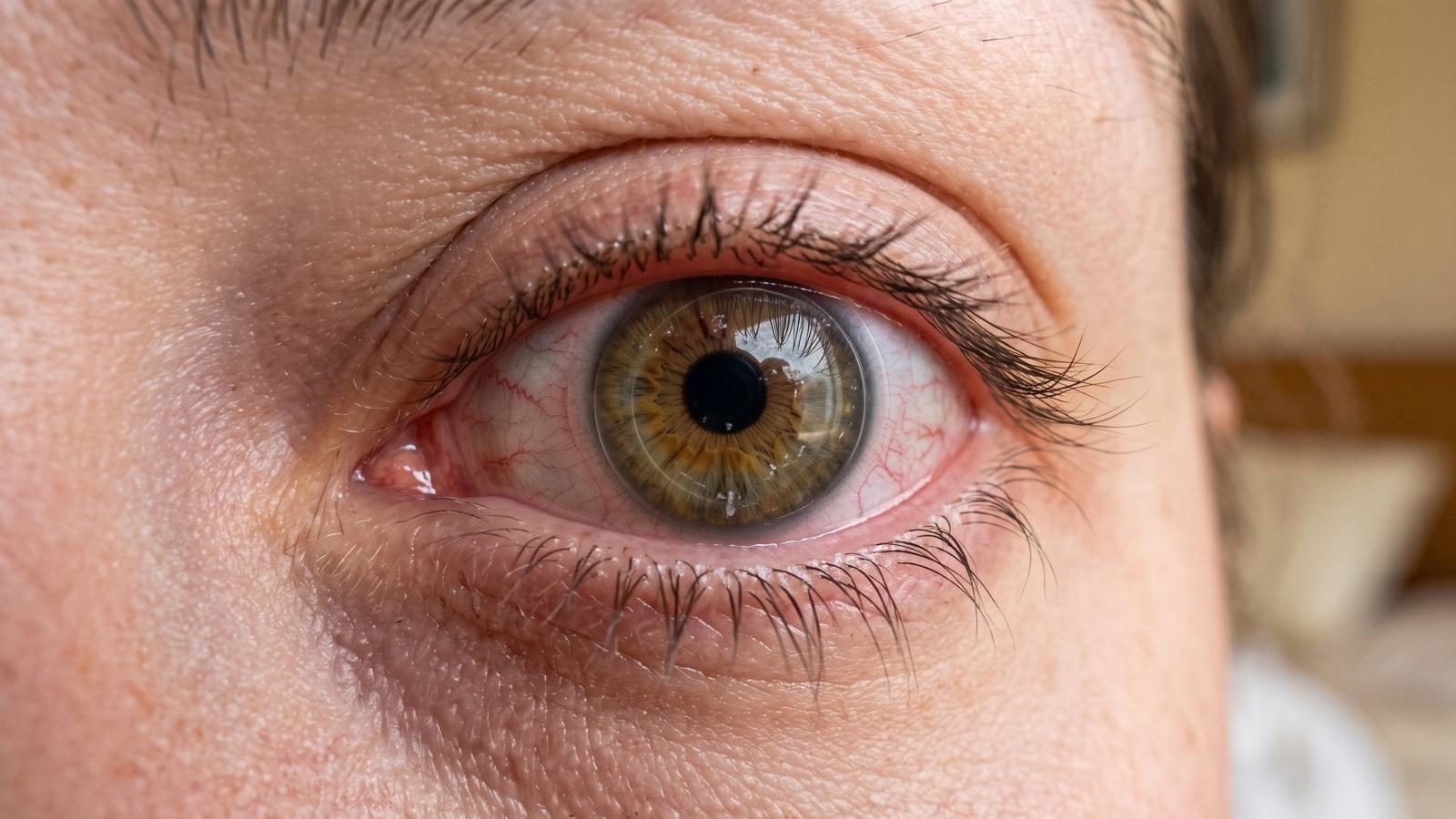
Most people wake up with nothing worse than dry eyes. That's exactly what makes this habit so dangerous. It feels harmless until the one night it isn't.
Infection Risk Jumps Six to Eightfold
The numbers come straight from the CDC. Sleeping in lenses, whether by accident, occasionally, or as part of a prescribed schedule, raises the risk of contact lens-related eye infections six- to eightfold.
To put that in perspective, the CDC estimates that out of every 10,000 people who sleep overnight in their lenses in a year, 18 to 20 will develop microbial keratitis.
Keratitis: The Infection to Know
Keratitis is an infection of the cornea, and it comes in several forms. Each one is serious, and each one becomes more likely when you sleep in contacts.
|
Type |
Cause |
Why It Matters |
|---|---|---|
|
Bacterial keratitis |
Bacteria like Pseudomonas aeruginosa |
Can progress fast and cause corneal ulcers |
|
Fungal keratitis |
Fungi, often linked to poor lens care |
Slow to treat and may require surgery |
|
Acanthamoeba keratitis |
Amoebas found in tap water, pools, and hot tubs |
Extremely painful and difficult to cure |
Microbial keratitis is the umbrella term for these infections. Left untreated, any of them can cause lasting corneal damage.
Corneal Ulcers and Permanent Damage
When an infection eats into the cornea, it can form a corneal ulcer, which is an open sore on the eye's front surface. Ulcers can leave permanent scarring that blurs vision for good.
The worst cases go further. CDC case reports show these infections can require surgery and lead to corneal damage and possible permanent vision loss. Some patients in those reports needed a corneal transplant.
Oxygen Deprivation Adds Up
Not every risk is an infection. Repeated oxygen deprivation slowly wears your eyes down too.
-
Corneal swelling: a starved cornea swells, causing blurry vision and halos.
-
New blood vessel growth: chronic hypoxia can push abnormal blood vessels into the cornea as your eye tries to find more oxygen.
-
Dry eyes and irritation: lenses dry out overnight and cling to the corneal surface.
-
Corneal abrasions: a dry, tight lens can scratch the cornea as it shifts during sleep.
-
Giant papillary conjunctivitis: trapped debris under lenses can inflame the inner eyelids, making future lens wear uncomfortable.
What About a Quick Nap?
Many people assume the danger only applies to a full night. Unfortunately, a nap counts too.
The CDC groups sleeping and napping together, noting that roughly a third of lens wearers report doing one or both. Even a short snooze cuts oxygen and tear flow, and the risk grows the longer you're out.
Pro tip: If you feel drowsy on the couch, on a flight, or during a long commute, take your lenses out before you get comfortable. Resting your eyes for a few minutes while awake is fine. Drifting off is the problem.
Can Any Contacts Be Worn Overnight?
Yes, but only a specific type, and only with your eye doctor's approval. These are called extended wear contact lenses.
Extended Wear Doesn't Mean Zero Risk
Better oxygen flow lowers some risks, but it doesn't erase them. The CDC's six- to eightfold infection risk applies even when sleeping in lenses is part of a prescribed wearing schedule.
That's why extended wear contacts require regular monitoring. You'll need a contact lens exam before starting and routine check-ins with your eye care professional to make sure your eyes stay healthy.
Colored and Cosmetic Lenses Stay Daytime Only
Most colored lenses are designed strictly for daily wear. Bella lenses, for example, are made from polymacon, a comfortable hydrogel material with an oxygen permeability rating of 12. That's great for all-day comfort, but it isn't built for overnight use.
So the rule is simple: your colored lenses always come out before bed. If you want to understand how daily routines affect your eyes, our guide on whether you can wear colored contacts every day breaks it down.
What to Do If You Fall Asleep

It happens. Don't panic, and don't yank the lens out. A dried lens clings to your eye, and pulling too fast can scratch the cornea.
Removing Lenses Safely After Sleep
Follow these steps as soon as you wake up.
-
Blink several times to stimulate tears and loosen the lens.
-
Add sterile rewetting drops for extra lubrication if the lens feels stuck.
-
Wait a few minutes until the lens moves freely when you blink.
-
Remove the lens gently with clean, dry hands.
-
Toss daily disposables. Clean reusable lenses with fresh solution in a clean lens case.
-
Switch to glasses and skip contacts for at least 24 hours.
Symptoms to Watch Afterward
Mild dryness that fades within an hour or two is common. Anything beyond that deserves attention.
|
Symptom |
What It May Signal |
What to Do |
|---|---|---|
|
Persistent redness |
Inflammation |
Keep lenses out and monitor |
|
Burning sensation |
Corneal stress |
Keep lenses out and call your eye doctor |
|
Blurry vision |
Corneal swelling or infection |
Call your eye doctor promptly |
|
Light sensitivity |
Corneal inflammation |
Book an urgent eye exam |
|
Excessive watering or discharge |
Possible infection |
Seek same-day care |
|
Severe pain with blurry vision |
Serious infection or ulcer |
Get immediate medical attention |
If you notice severe pain, light sensitivity, and sudden blurry vision together, don't wait until morning. Bacterial infections can move quickly, and fast treatment protects your vision.
How to Stop Sleeping in Your Contacts
The best cure is a routine that makes removing lenses automatic. A few small changes do most of the heavy lifting.
Build a Lens-Free Bedtime Routine
-
Set a nightly reminder on your phone for lens removal.
-
Keep glasses on your nightstand so switching feels effortless.
-
Store your lens case and solution near where you actually wind down, not just in the bathroom.
-
Remove lenses before movies, flights, or long drives where dozing off is likely.
Keep a Backup Kit With You
Many accidental overnights happen away from home. You crash at a friend's place, fall asleep on a trip, or stay out later than planned.
A compact contact lens travel kit solves that. It packs a lens case, soft-tip tweezers, a remover stick, and a mirror into one pocket-sized bundle. Add a bottle of Tangible Clean lens solution, and you'll never have an excuse to leave your lenses in.
Consider Daily Disposables
If you often forget to take lenses out, daily disposables simplify everything. There's no cleaning, no storing, and no temptation to "just wear them one more night."
Our One Day collection offers colored daily disposables you open fresh each morning and toss at night. Still not for sleeping, but far easier to manage. Not sure which schedule fits you? Compare options in our guide to Bella daily vs. 3-month contact lenses.
Keep Lenses Away From Water
Sleep isn't the only overnight danger. Water carries the microorganisms behind some of the worst eye infections, so the CDC recommends removing contacts before showering or swimming.
-
Never rinse lenses or your lens case with tap water.
-
Skip hot tubs and pools with lenses in.
-
Replace your lens case every few months.
For more habits that keep your eyes healthy, check our lens care guide and our list of what to avoid when wearing colored contact lenses.
Sleep Smarter, See Better With Daring Eyes
Sleeping in contacts rarely feels dangerous, which is exactly the trap. Less oxygen, fewer tears, and trapped bacteria turn your eye into an infection risk overnight. The fix is simple: lenses out, every night, no exceptions.
Key takeaways:
-
Sleeping in contacts raises infection risk six to eight times.
-
Naps count too, even short ones.
-
Only extended wear lenses are approved overnight, and they still carry risk.
-
Colored lenses should always come out before bed.
-
Severe pain, light sensitivity, or blurry vision need immediate care.
At Daring Eyes, we make healthy habits easier with FDA-approved Bella lenses, daily disposable options, and portable care essentials. Keep a travel kit handy, your glasses nearby, and your lenses in their case overnight. Your eyes will thank you every morning.
Frequently Asked Questions
Can you take a 20 minute nap with contacts in?
It's not recommended. Even short naps reduce oxygen to your cornea and raise infection risk. Remove your lenses first whenever possible.
Can I close my eyes for 5 minutes with contacts in?
Yes. Briefly resting your eyes while awake is fine. The risk comes from actually falling asleep, so remove lenses if you feel drowsy.
Can I shower with contacts in?
It's best not to. Water can carry Acanthamoeba and bacteria that cause serious eye infections. Remove lenses before showers, swimming, or hot tubs.
What happens if you sleep with contacts for 30 minutes?
Usually mild dryness or irritation. Still, any sleep in lenses raises infection risk. Use rewetting drops, remove them, and watch for redness or pain.