


One blink, and something feels wrong. Scratchy. Sharp. Suddenly your contact lens isn't sitting right, and you realize it's in pieces.
Panic is the reaction. It's also the worst one. A torn contact lens is usually easy to fix at home, as long as you follow the right steps.
This guide covers:
-
How to tell your lens tore
-
Why fast removal matters
-
Step-by-step removal for soft lenses
-
What to do if a hard lens breaks
-
Aftercare and prevention tips
At Daring Eyes, we care about your eye health long after checkout. So consider this your calm game plan.
How to Tell Your Lens Tore
Sometimes a tear is obvious. Other times, it hides until you take the lens out and find half of it missing. Knowing the signs helps you act before a small problem becomes a scratched cornea.
What a Torn Contact Feels Like
Most people notice the change right away. A torn edge can rub against your eye with every blink, and vision may turn blurry or distorted because the lens no longer sits properly on the cornea.
Watch for these signs:
-
A sharp or scratchy sensation each time you blink
-
Sudden blurred vision in one eye
-
A lens that feels loose, folded, or off-center
-
Watering, redness, or light sensitivity
-
A "something's stuck" feeling under your upper eyelid
Can a Lens Get Lost Behind Your Eye?
No. This is one of the most common contact lens fears, and it's anatomically impossible.
A thin, moist membrane called the conjunctiva lines your inner eyelids, then folds back to cover the white of your eyeball. Because that lining is continuous, nothing can slip behind your eye and get trapped there.
So where do missing pieces go? In most cases, a stuck contact lens fragment has simply slid under your upper eyelid or drifted toward the corner of your eye. It feels lost. It isn't.
Why You Should Remove It Fast
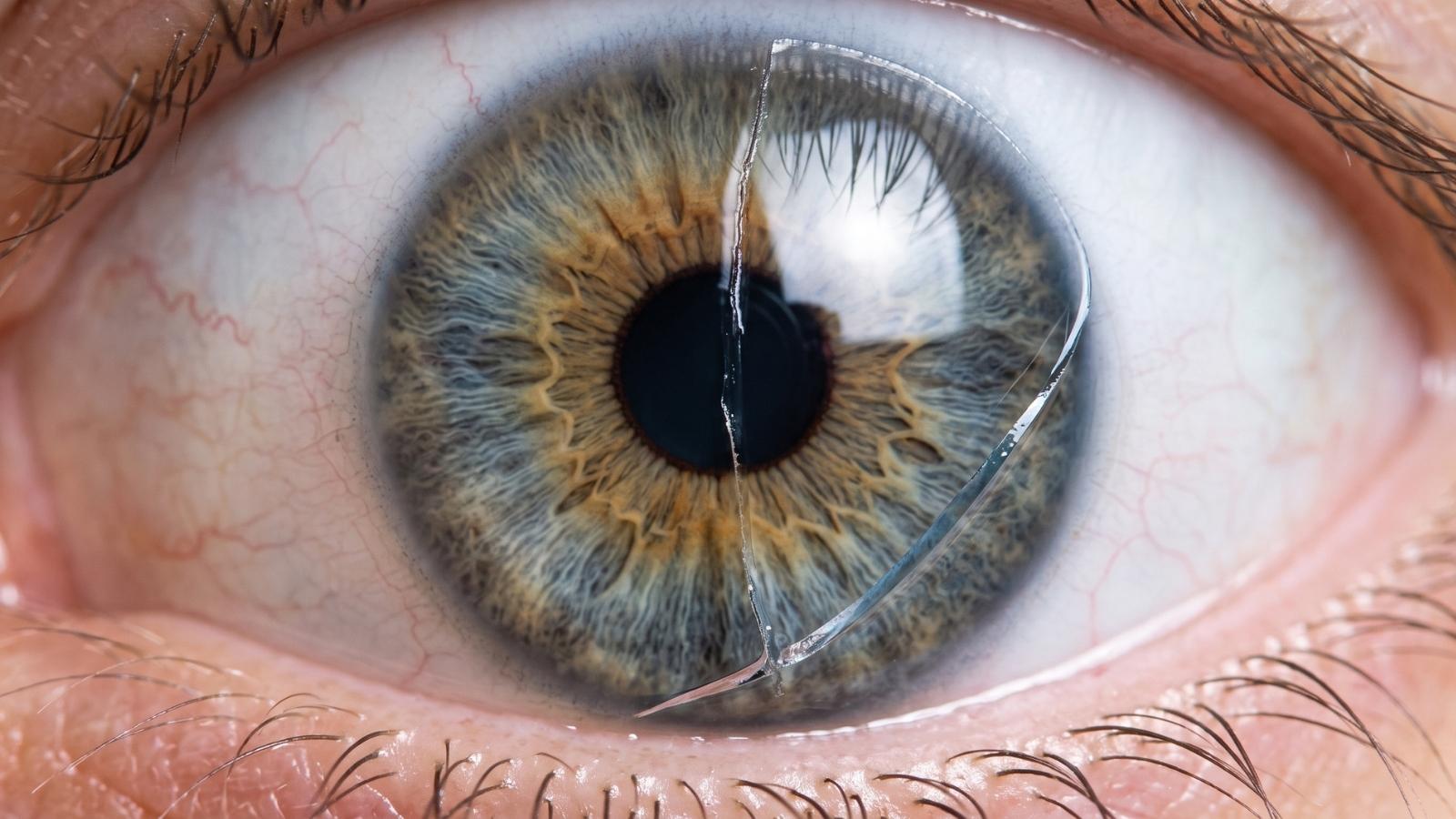
A torn lens isn't usually an emergency, but it shouldn't stay put either. Removing a torn lens promptly protects your cornea, the clear, dome-shaped tissue covering the front surface of your eye.
|
Risk |
What Happens |
|---|---|
|
Corneal abrasions |
Jagged edges scratch the surface of the cornea |
|
Eye infection |
Scratches give harmful microorganisms an easy way in |
|
Trapped debris |
Bacteria can get trapped beneath the torn piece |
|
Worsening irritation |
Every blink grinds the fragment against your eye |
Even a tiny rip matters. You should never keep wearing a torn contact lens, since any rough edge can cause discomfort, scratch the eye, or trigger further complications.
Pro tip: If your lens tears while it's still in the case or on your finger, toss it. Never put a torn lens in your eye "just for a few hours."
How to Remove a Torn Soft Lens
These steps apply to soft contact lenses only. If you wear hard contacts, skip ahead to the next section, since the techniques below can injure an eye wearing rigid lenses.
Stay Calm and Don't Rub
Your first instinct will be to rub. Resist it. Rubbing can grind a fragment against your cornea and push smaller pieces deeper under your eyelid.
Remain calm instead. Torn or broken soft contacts usually aren't an emergency, but you still want the fragment out as soon as possible.
Step-by-Step Removal
Follow these simple steps in a bathroom with bright lighting and a clean mirror.
-
Wash your hands with soap and water for a full 30 seconds. Dry them with a lint-free towel.
-
Lubricate your eye with 3 to 4 rewetting drops or sterile saline solution. Moisture loosens the lens and rehydrates your eye for easier removal.
-
Blink gently 10 to 15 times. Blinking helps shift the pieces toward the outer corner of your eye.
-
Locate the fragments. Pull down your lower lid and check, then lift your upper eyelid and look down. Glance up, down, left, and right to spot anything hiding.
-
Slide it to the white of your eye. Use the soft pad of your index finger to gently slide the torn piece off the cornea while you look in the opposite direction.
-
Pinch it out. Use the pads of your index finger and thumb, never your nails, to carefully lift the fragment from your eye.
-
Rinse and repeat. Flush with sterile saline after each fragment until every piece is out.
Finding a Piece Under Your Eyelid
If a fragment refuses to show itself, it's probably tucked under your upper eyelid. Close your eye and gently massage the upper lid. You'll often feel the moment it loosens and moves.
Then open your eye, look down, and carefully lift the lid. Flutter your eyelids a few times to nudge the piece into view before you try to remove it.
Rebuild the Lens Before You Stop
Don't stop at the larger pieces. Lay the removed fragments on a clean fingertip and check whether they form a complete lens.
If a piece seems missing, don't dig for it. Your eye naturally pushes out foreign objects through blinking and tears, so the fragment may have fallen out without you noticing. Keep flushing with saline and pay attention to how your eye feels.
Pro tip: Never rinse your eye with tap water or multi-purpose lens solution. Tap water can carry harmful microorganisms, and your contact solution isn't designed to be used as an eye wash. Stick to sterile saline or approved rewetting drops.
What If a Hard Lens Breaks?
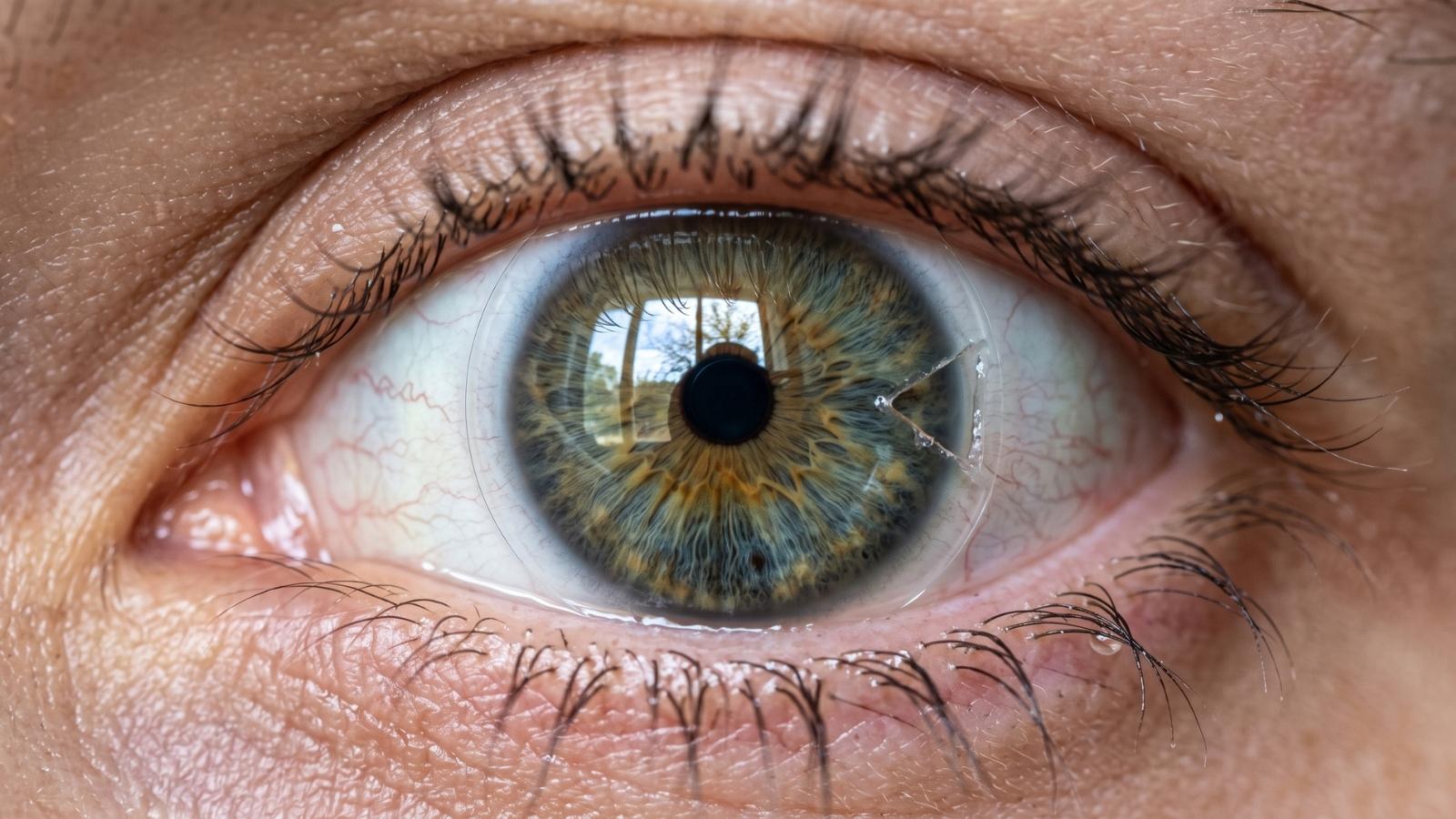
Rigid gas permeable lenses behave very differently from soft ones. They're stiff, so a broken lens can leave sharp, jagged edges that easily scratch the eye.
That changes the game plan completely. A broken gas permeable lens requires professional removal, so see your eye doctor or seek emergency care right away if a hard contact breaks while it's in your eye.
While You Wait for Help
-
Keep your eye closed gently to limit movement.
-
Don't rub, pinch, or poke at the fragments.
-
Don't try the soft lens technique. Sliding a sharp fragment across the cornea can cause corneal abrasions.
-
Bring your lens case and any pieces you've already removed, so your doctor can see what's missing.
A Quick Note for Daring Eyes Customers
If you wear lenses from Daring Eyes, this scenario doesn't apply to you. We don't sell hard contact lenses. Every lens in our lineup is a soft colored contact lens, so the soft lens removal steps above are the ones to follow.
What to Do After Removal
Getting the lens out is only half the job. The next 24 hours decide whether your eye bounces back fast or ends up irritated for days.
Give Your Eye a Break
Your eye just went through a lot. Treat it gently.
-
Flush generously with sterile saline to wash away any microscopic debris.
-
Switch to glasses for at least a day to let the surface recover.
-
Throw the torn lens away. Never tape, trim, or reuse a broken lens.
-
Use lubricating eye drops if your eyes feel dry or gritty.
Some mild discomfort is normal early on. Grittiness and light sensitivity during the first few hours are common, but sharp pain or blurry vision means you should seek care.
When to See an Eye Doctor
Most torn lenses end at the bathroom sink. Some don't. Use this table to decide your next move.
|
Symptom |
What to Do |
|---|---|
|
Can't find all the fragments after several minutes |
Stop searching and call your eye doctor |
|
Redness, discomfort, or vision changes persist |
Book an eye doctor visit promptly |
|
Discharge or pain that keeps getting worse |
Get same-day care to rule out an eye infection |
|
Severe pain or sudden vision changes |
Seek urgent care or visit the emergency room |
|
A rigid gas permeable lens broke in your eye |
Seek professional help immediately |
If you can't locate or remove all the pieces after several minutes, stop trying and contact your eye doctor, since continued searching can damage delicate eye tissue. Your doctor has specialized tools to find stubborn fragments and check for scratches.
Ignoring persistent symptoms is never worth the risk. An untreated abrasion or infection can escalate, and in rare cases, lead to vision loss.
How to Prevent Torn Contact Lenses
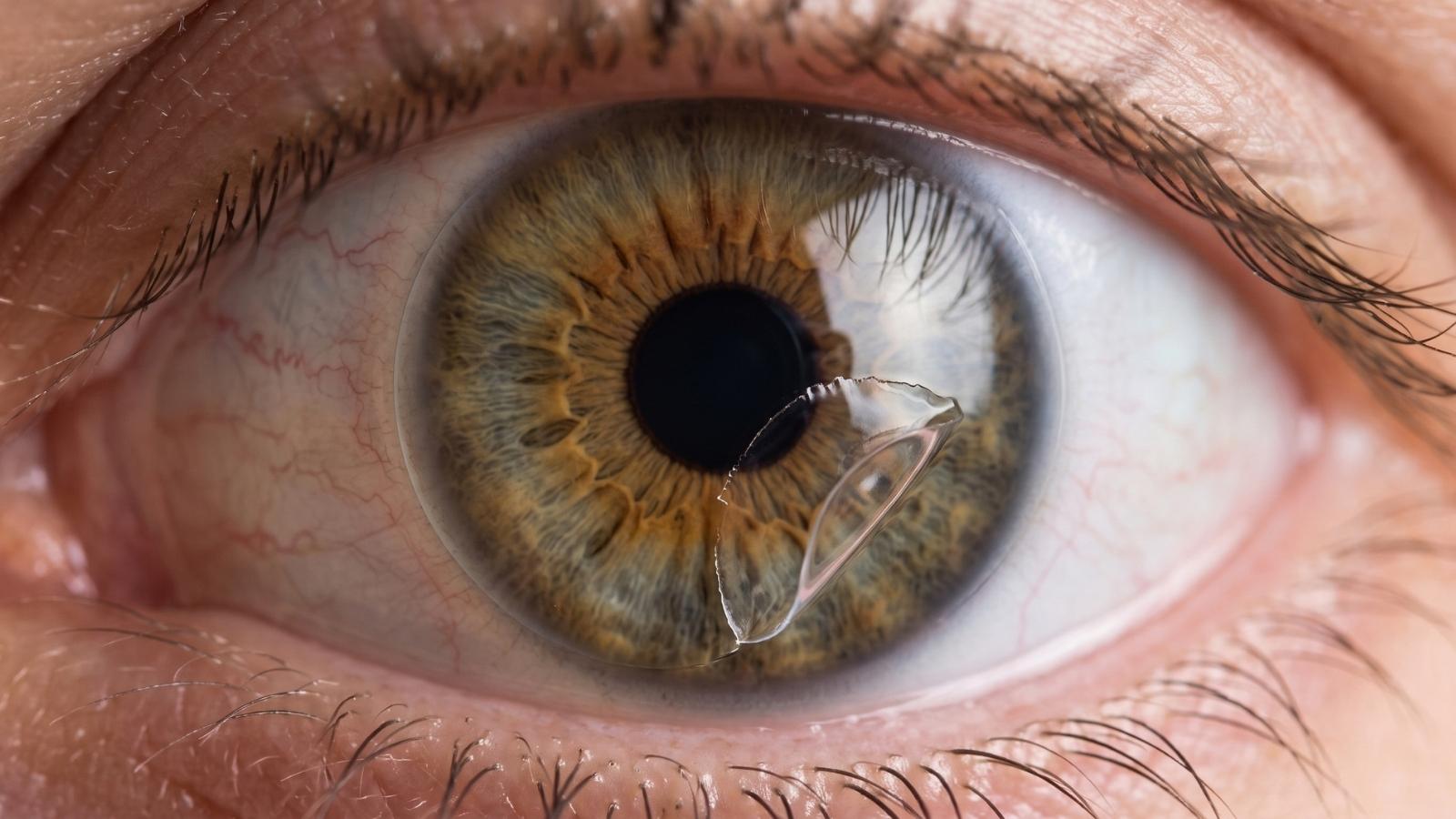
Most tears aren't bad luck. They come from dry lenses, rough handling, or lenses worn past their prime. Fix those three habits, and torn lenses become rare.
Handle Lenses With Care
Your fingers are the most common culprit.
-
Keep nails short and smooth to protect both the lens and your eye.
-
Never pull apart a folded lens. Place it in your palm, cover it with solution, and gently massage it until it opens on its own.
-
Add rewetting drops before removal whenever your eyes feel dry, so the lens doesn't cling to your cornea.
-
Inspect every lens for nicks or tears before it goes in.
Store and Replace Lenses Properly
Dry contact lenses tear far more easily, so always store them fully submerged in lens solution. Never use water or other liquids, which can lead to infection.
A quality multi-purpose formula like Tangible Clean lens solution keeps stored lenses hydrated and clean. Pair it with a fresh lens case every 1 to 3 months. Our contact lens kit bundles a case, soft-tip tweezers, a remover stick, and a mirror, making handling easier and gentler on the lens.
Old lenses also weaken over time. Stick to your replacement schedule, and check our guides on how often to change your colored contact lenses and when contact lenses expire.
Choose Lenses That Suit Your Eyes
The right lens starts with a proper fitting. A well-fitted lens is more comfortable and far less likely to tear, so keep your eye exams up to date.
If you tear lenses often, daily disposables are worth a look. A fresh lens every morning means less handling, no overnight storage, and no wear building up over weeks. Our One Day collection delivers exactly that in natural colored shades.
Dry eyes play a big role too. Bella lenses use high water retention materials that support oxygen flow and suit eyes prone to dryness. For more options, explore our picks for hydrating contact lenses for all-day comfort.
Keep Your Lenses Tear-Free With Daring Eyes
A torn contact lens feels alarming, but it rarely has to be. Stay calm, lubricate, locate every piece, and remove it gently. Then give your eye a rest and know when to call in a professional.
Key takeaways:
-
Don't rub. It can scratch your cornea or push pieces deeper.
-
Use sterile saline or rewetting drops, never tap water.
-
Slide soft fragments to the white of your eye, then pinch them out.
-
Broken hard lenses always need professional removal.
-
See a doctor for persistent pain, redness, or vision changes.
Prevention starts with quality lenses and good habits. At Daring Eyes, you'll find FDA-approved Bella lenses, daily disposable options, and the care essentials that keep lenses hydrated and intact. Better lenses mean fewer surprises, and far fewer bathroom-mirror emergencies.
Frequently Asked Questions
Can I leave a ripped contact in my eye?
No. Jagged edges can scratch your cornea and raise infection risk. Remove the torn lens promptly, then switch to glasses to let your eye recover.
Will a broken contact lens eventually come out?
Small soft fragments often flush out naturally through blinking and tears. If discomfort continues, see an eye doctor to remove any remaining pieces.
Should I go to the ER for a stuck contact lens?
Usually not. Call your eye doctor first. Go to the emergency room for severe pain, sudden vision changes, or a broken hard lens.
What does a torn contact feel like?
Scratchy, sharp, or gritty with every blink. You may also notice blurred vision, watering, redness, or a lens that feels off-center.